
What Is a Misting System? A Complete Guide to How It Works
What a Misting System Actually Is
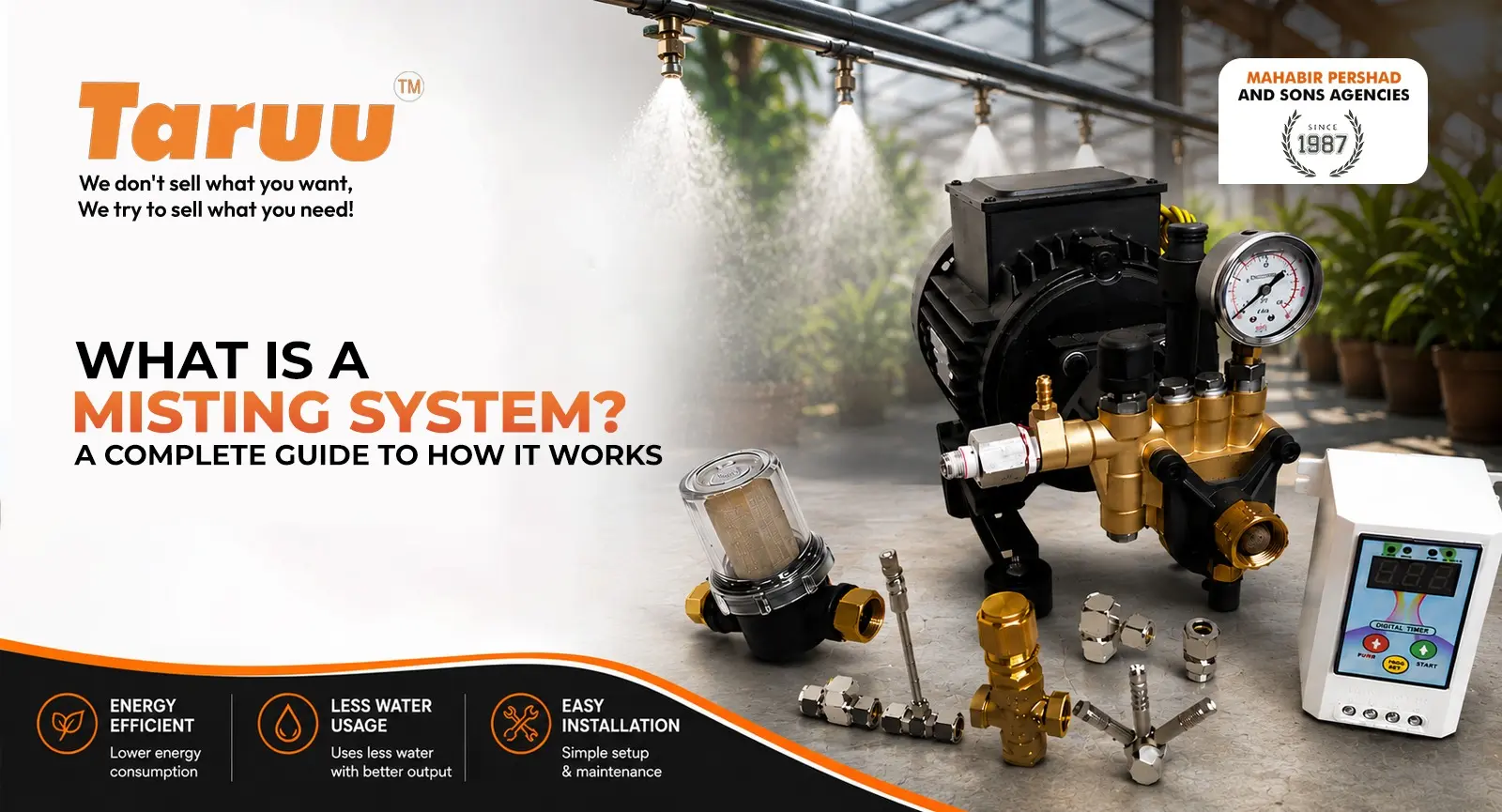
 A Misting system is a network of pipes, a high-pressure pump, and specialised misting nozzles that work together to push water at high pressure through tiny nozzle openings. The water sprays as droplets so small — typically 5 to 50 microns in diameter — that they flash-evaporate almost immediately on contact with warm air.
That evaporation is what creates the cooling effect. The system doesn’t just spray water — it converts liquid water into vapour that absorbs heat from the surrounding air as it evaporates, lowering the ambient temperature measurably and almost instantly.
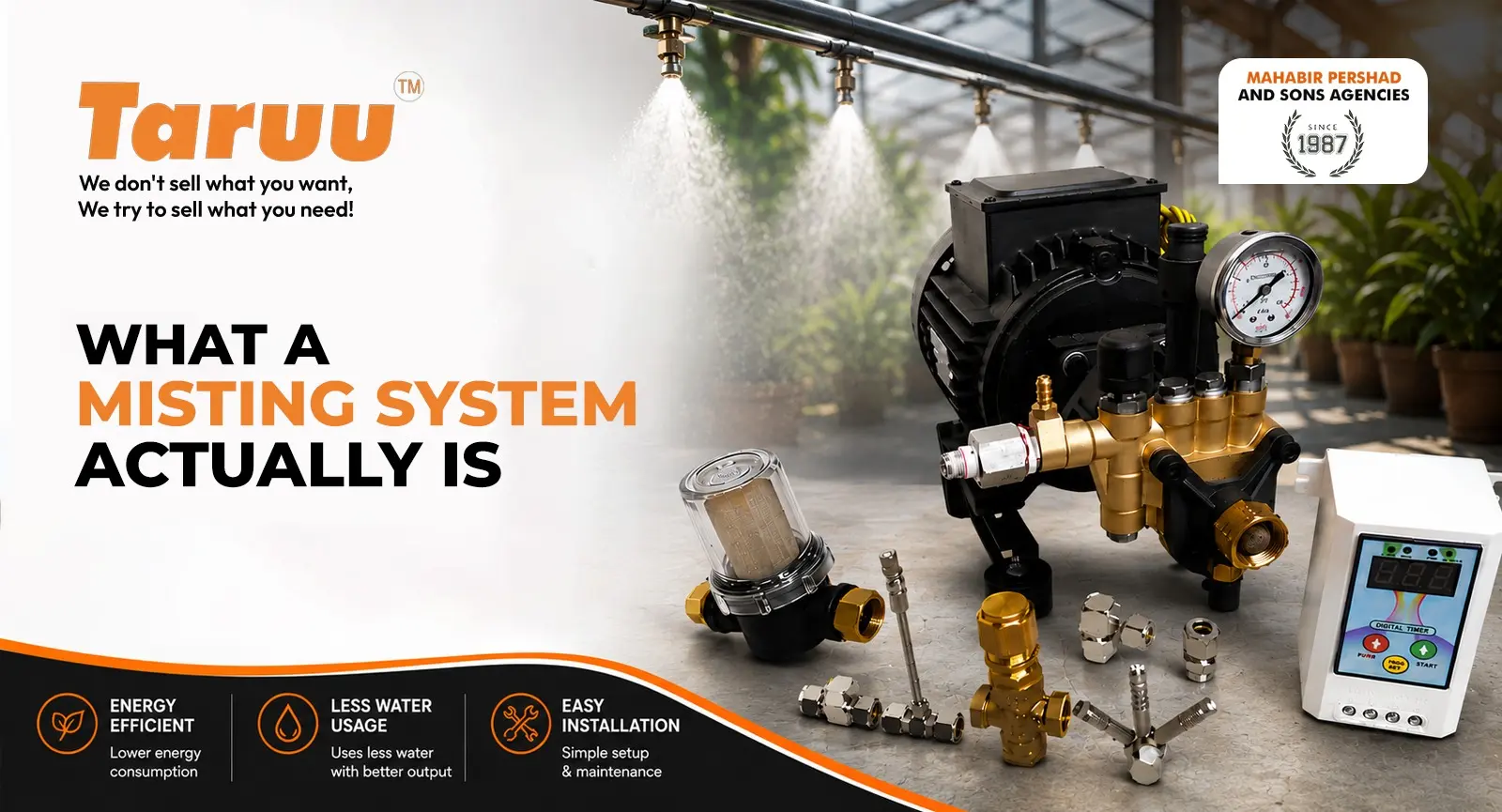
A Misting system is a network of pipes, a high-pressure pump, and specialised misting nozzles that work together to push water at high pressure through tiny nozzle openings. The water sprays as droplets so small — typically 5 to 50 microns in diameter — that they flash-evaporate almost immediately on contact with warm air.
That evaporation is what creates the cooling effect. The system doesn’t just spray water — it converts liquid water into vapour that absorbs heat from the surrounding air as it evaporates, lowering the ambient temperature measurably and almost instantly.
How a Misting System Works
A water mist system works on a fairly simple idea once you break it down: turn water into droplets small enough to evaporate almost instantly, and let that evaporation pull heat out of the surrounding air.- Water is forced through tiny nozzle openings, breaking it into micro-droplets, often smaller than 50 microns
- Those tiny droplets have a huge amount of surface area relative to their size, so they evaporate almost the moment they leave the nozzle
- Evaporation needs energy to happen, and that energy gets pulled from the air around it, in the form of heat
- As the heat gets drawn out, the air temperature drops — sometimes by 15 to 30 degrees Fahrenheit, depending on humidity and airflow
Key Components of a Mist Cooling System
Every misting system — regardless of type — is built around the same core components:- High-pressure pump — the heart of the system; pressurises water to the operating pressure required for fine droplet production
- Stainless steel or nylon tubing — carries the pressurised water from the pump to the nozzle positions
- Misting nozzles — the point where water exits the system; nozzle aperture size, material, and design determine droplet size and spray pattern
- Filter system — removes particulates and minerals from the water supply before it enters the pump and nozzles; prevents clogging and extends component life
- Control system — timers, thermostats, or humidity sensors that automate system operation based on ambient conditions
- Manifold and fittings — distribute water to multiple nozzle positions uniformly
Types of Misting Systems
Not all water mist systems work at the same pressure or suit the same application. The three main categories are:High-pressure misting system
Operates at 700 to 1000 PSI. Produces the finest droplets — typically 5 to 10 microns — that evaporate almost completely before reaching any surface. Provides the greatest temperature reduction and virtually no wetting. Used in commercial, industrial, and agricultural applications.Mid-pressure misting system
Operates at 150 to 250 PSI. Produces slightly larger droplets than high-pressure systems. Effective cooling with minimal wetting. Suitable for covered outdoor spaces and some agricultural applications.Low-pressure misting system
Uses standard water supply pressure — around 60 PSI. Easier to install and lower in cost, but produces larger droplets that may cause some wetting of surfaces below. Better suited to garden irrigation and basic outdoor cooling than to situations where keeping surfaces dry is important .Applications — Where Water Mist Systems Are Used
Mist cooling systems are used across a remarkably wide range of applications:Outdoor Cooling
- Restaurant patios, hotel pool decks, and resort areas
- Sports venues, stadiums, and open-air event spaces
- Amusement parks and theme park queuing areas
- Construction sites and outdoor work environments
Agricultural and Greenhouse
- Greenhouse humidity control — maintaining optimal moisture levels for plant growth
- Livestock cooling — reducing heat stress in poultry farms, dairy operations, and piggeries where high temperatures reduce productivity
- Fruit and vegetable storage — maintaining humidity during storage to prevent wilting
Industrial Applications
- Dust suppression — controlling airborne dust at mining sites, quarries, construction sites, and material handling operations; a dust suppression misting system reduces respirable particulate significantly
- Odour control — at waste processing facilities, composting operations, and food processing plants
- Static electricity elimination — in printing and textile operations where dry air causes static build-up
- Industrial process cooling — cooling equipment or work areas in manufacturing environments
Specialised Applications
- Fog effects at entertainment and hospitality venues
- Special effects in theme parks and stage productions
- Data centre cooling in some configurations
- Fire protection pre-cooling around high-risk structures
Sourcing From Misting System Manufacturers
When sourcing from mist cooling system manufacturers, these factors determine whether the system delivers what’s promised:- Pump quality and pressure rating — confirm the pump is rated for the application’s operating pressure with sufficient flow rate for the number of nozzles
- Nozzle material — stainless steel and brass nozzles outlast plastic in outdoor and industrial environments; confirm the material for the application
- Filter specification — what filtration is included and at what micron rating
- Warranty and service support — pumps and nozzles need maintenance; confirm the manufacturer provides spare parts and service support
- Customisation capability — most installations have specific layout requirements; confirm the manufacturer can design to the site plan