
What Is a Hydro Test Pump? Working Principle, Uses & Applications
- Taruu
- Industrial Testing Equipment
- What Is a Hydro Test Pump? Working Principle, Uses & Applications
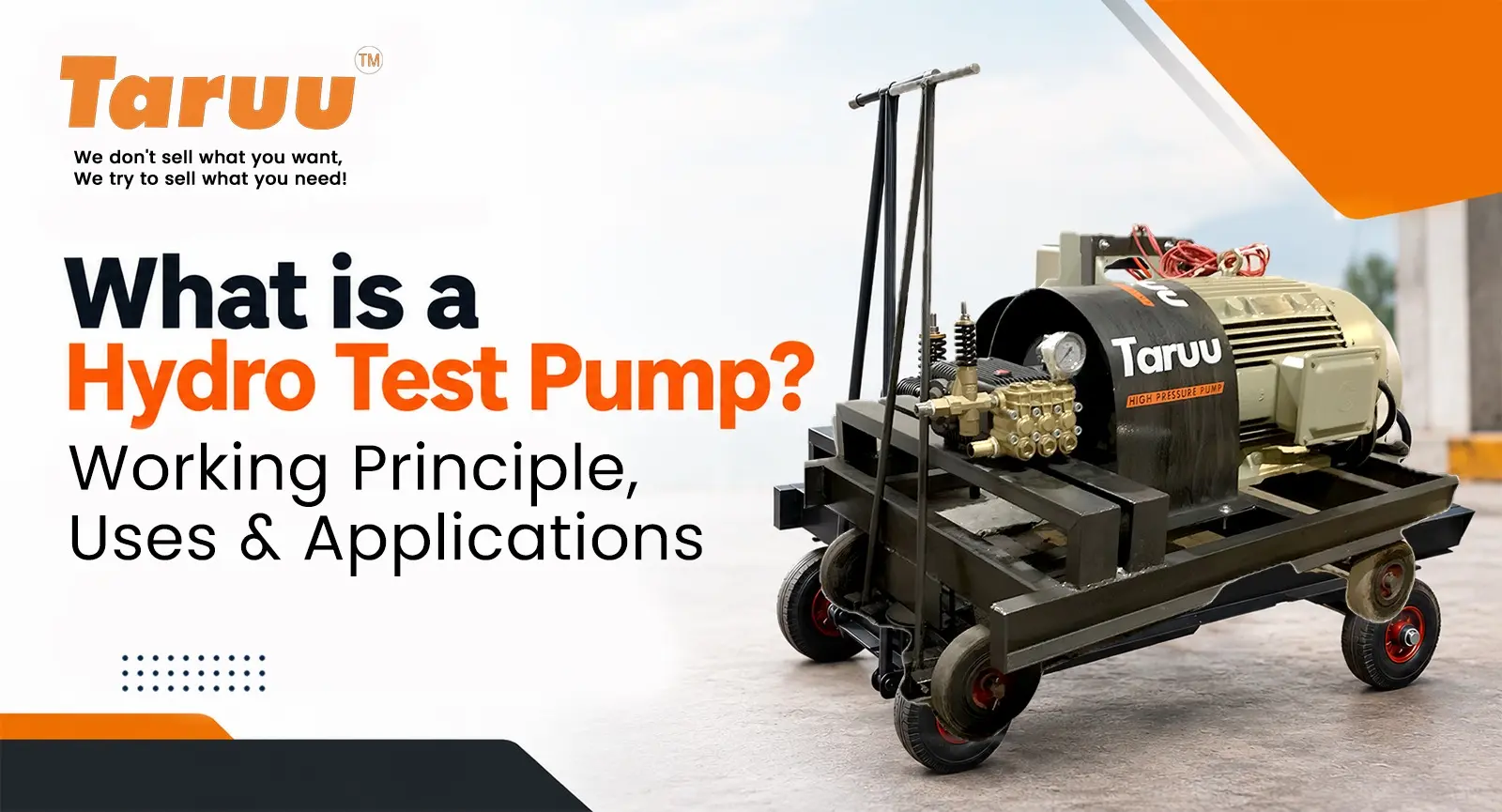
Quick Summary: This article explains what a hydro test pump does, how a hydrostatic test runs from fill to drain, and which type of pump is perfect for which working condition. It also gives B2B buyers a selection checklist, a list of costly testing mistakes, and the questions to ask hydro test pump manufacturers.
Table of Contents
Introduction
Before a pipeline carries a drop of product, someone has to ensure it doesn’t leak, and also before a boiler goes into service, someone has to ensure that it can take the pressure. That assurance comes from a hydro test pump. This pump injects a vessel, pipe, or system with water or another liquid, raises the pressure to a set level, and holds it while inspectors look for leaks, weak welds, and deformation. Because liquids barely compress, a failure during the test releases far less energy than it would with gas, which is why hydrostatic testing is the preferred approach for pressure equipment. In this article, we explain how this test pump works, discuss the main types, and show where each one is used. You will also find tips on choosing the right model, mistakes that spoil test results, and what to ask hydro test pump manufacturers before you place an order.
What Does a Hydro Test Pump Do?
A hydro test pump is a high-pressure pump that has one major function: raising pressure inside a closed system and holding it steady. It doesn’t move liquid for flow, the way a transfer pump does. It builds pressure, and that difference shapes its whole design. Many codes set the test pressure between 1.3 and 1.5 times the design pressure, so a system designed for 100 bar may be tested at 130 to 150 bar. For reference, 1 bar equals about 14.5 psi.
How a Hydro Test Pump Works
A good test follows a fixed order, and skipping a step usually means repeating the test:
- Fill and Vent: Water fills the system while operators open high-point vents to push out trapped air.
- Pressurize in Stages: The pump’s plunger forces liquid into the closed system, and pressure climbs gradually to the test value.
- Hold: The operator isolates the hydro test pump and holds pressure for the time the specification requires, often 10 minutes or more.
- Inspect: Inspectors check welds, joints, and flanges for leaks or deformation while watching the gauge for any drop.
- Release and drain: A release valve brings pressure down slowly, then crews drain and dry the system.
Each step protects either the equipment or the accuracy of the result.
Functioning of the Hydro Test Pump
Most units share the same core parts:
- A reservoir holds the test liquid.
- A plunger or piston generates pressure.
- Check valves stop liquid flowing backward.
- A relief valve protects against overpressure.
- A calibrated gauge shows the pressure.
A fault in any of these corrupts the test, so inspect them before every use.
Types of Hydro Test Pumps
The right type depends on pressure, volume, and the power available on site. Different types of pumps available in the industry are:
Hand-Operated Pumps
A lever drives a small piston. These suit valves, gauges, and small vessels where volume stays low, and they need no power. High pressures tire the operator quickly, though.
Electric Pumps
A motor drives the plunger, which gives faster filling and steadier pressure. Pipelines and large vessels usually need this type, often paired with a chart recorder or data logger.
Air-Driven Hydro Test Pumps
Compressed air drives a piston, and output pressure roughly equals air pressure multiplied by the pump’s ratio. The pump stalls once it reaches the set pressure and then uses almost no air. With no electric motor, it also suits hazardous areas.
Engine-Driven Pumps
Diesel units serve remote pipeline sites where no power supply exists.
Where Hydro Test Pump is Used
Anything that holds pressure gets proven before it enters service. The following are the places where this pump is used:
- Pipelines and process piping: Leak and strength checks after welding and before commissioning.
- Pressure vessels, boilers, and heat exchangers: Proof tests after fabrication or repair.
- Gas cylinders and hoses: A hydro test pump is used for periodic requalification and proof testing of assemblies.
- Fire protection lines: Crews check sprinkler and hydrant systems before handover.
- Valves and fittings: Bench tests of body and seat integrity before dispatch.
The pump’s work stays the same every time, which is to create a known pressure and hold it long enough to know the equipment is working.
How to Choose the Right Hydro Test Pump?
Match the pump to your working conditions, not to the biggest number on the datasheet:
- Pressure rating: Pick a pump that clears your highest test pressure with margin, because running at the limit wears seals.
- Volume: A small hydro test pump can take hours to fill a long pipeline. Many crews fill with a transfer pump first and use the test pump only to pressurize.
- Power source: Match hand, electric, air, or engine drive to what the site offers.
- Gauge range: ASME Section VIII asks for a range between 1.5 and 4 times the test pressure on vessels, so a 0 to 100 bar gauge is the wrong tool for a 90 bar test.
- Wetted materials: Seals and metals must suit the test liquid.
Get these five right, and most test problems never start.
What to Ask Hydro Test Pump Manufacturers?
Before you make a decision to buy this test pump from any manufacturer, it is important that you ask a few questions related to this pump. The following are the important questions to ask:
- Can you supply calibration certificates traceable to a national standard?
- Do you test every pump at full pressure before dispatch?
- Can you adjust pressure range, flow, or fittings to match our setup?
- How quickly can you deliver seals and spare parts?
Clear answers here usually predict good support later.
Mistakes That Spoil the Functioning of the Test Pump
Most failed tests of the hydro test pump happen because of a handful of habits such as:
- Leaving air in the system, which makes pressure drift and hides leaks.
- Pressurizing too fast, which stresses the equipment and overshoots the target.
- Ignoring temperature. A sealed pipe warming in sunlight can gain pressure during a long hold.
- Skipping gauge calibration, so nobody can trust the numbers.
- Leaving the system wet afterward, which invites corrosion.
A checklist taped to the pump skid prevents most of them.
Conclusion
A hydro test pump does one thing well: it tells you the truth about your equipment before it goes into service. Steady pressure, a smooth ramp-up, and an accurate gauge make that truth easy to trust. Taruu helps industrial buyers choose pumps that match their test pressures, flow needs, and site conditions, so every result stands up to inspection and audit. Start with your design pressure, water volume, and power source, and the right pump becomes much simpler to find.
FAQs
What is a hydro test pump used for?
A hydro test pump is used to pressurize pipes, vessels, and other equipment with liquid to check strength and find leaks.
Can a hydro test pump use fluids other than water?
Yes, a hydro test pump can use fluids other than water. Oils and water-glycol mixtures are used for hydraulic parts or freezing conditions, provided the pump’s seals suit them.
Is a hydro test the same as a leak test?
No, the hydro test is not the same as the leak test. A hydro test proves strength at pressure above design, while a leak test may run at lower pressure to find seepage.
How often does a hydro test pump need calibration?
It is important to calibrate the hydro test pump annually, or sooner after heavy use.
What maintenance does the pump need?
This pump requires basic maintenance regularly to work without any problems. You simply need to change the seals as per the schedule, flush after use, and check hoses and fittings for wear.